In, On or At? Time Prepositions Made Simple With 1 Picture

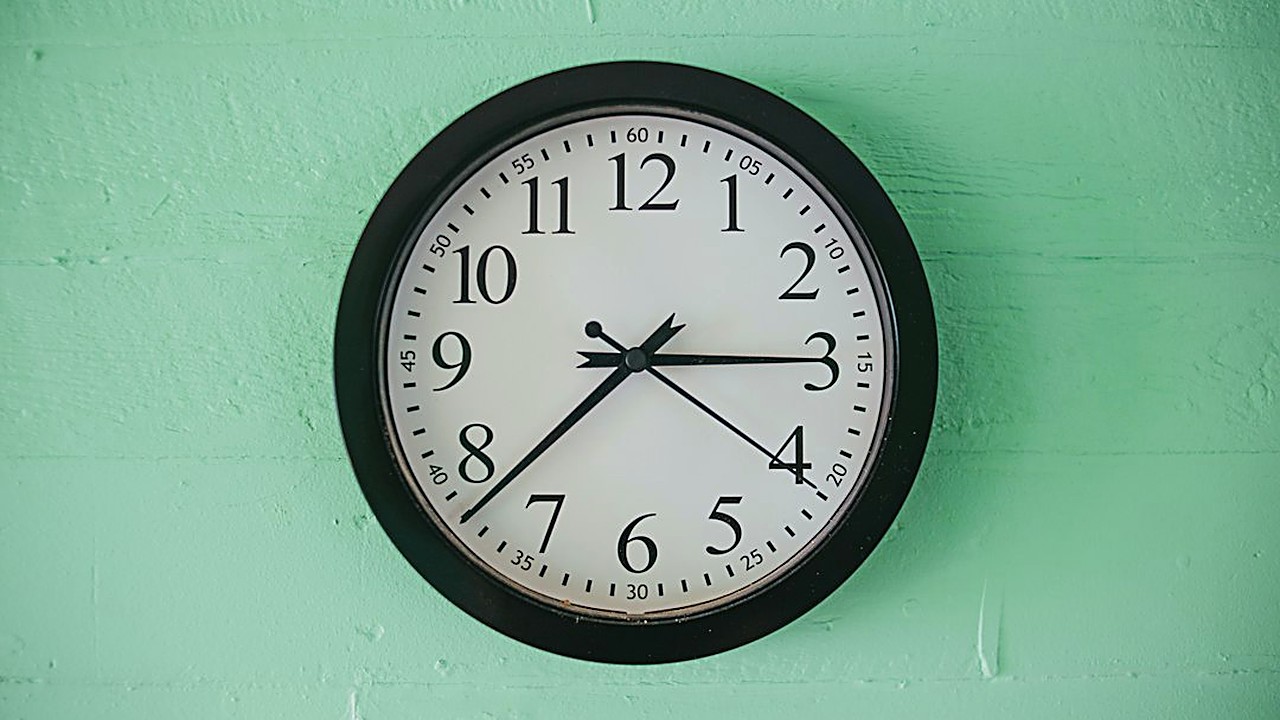
Quick answer: Use at for exact times (at 7:30), on for days and dates (on Monday), and in for longer periods (in July, in the morning). Skip the preposition before this, next, last, every, today, and tomorrow.↗ Share on X
Use at for exact times (at 7:30, at noon, at night), on for days and dates (on Monday, on May 4th, on my birthday), and in for longer periods (in the morning, in July, in 2025, in the summer). Think of it like a funnel: in is the biggest, on is in the middle, and at is the smallest and most exact. Learn that one picture and you will get most everyday sentences right.
The rest of this article covers the tricky cases: the exceptions, the words that replace in/on/at, and the pairs that confuse almost every learner, like for and since or by and until.
What is the easiest way to remember in, on, and at?
 Polite Requests at Work: Could, Would, May or Might? →
 Gerunds vs Infinitives: 'Stop Eating' or 'Stop to Eat'? →
 Countable vs Uncountable Nouns: 7 Mistakes and Easy Fixes →
Picture an upside-down triangle.
- At the top, the widest part, is in: months, years, seasons, centuries, and parts of the day.
- In the middle is on: specific days and dates.
- At the bottom, the narrow tip, is at: clock times and short, exact moments.
| Preposition | Use it for | Examples |
|---|---|---|
| in | months, years, seasons, decades, long periods | in March, in 2024, in winter, in the 1990s |
| in | parts of the day | in the morning, in the afternoon, in the evening |
| on | days of the week | on Monday, on Fridays |
| on | dates | on June 10th, on the 3rd |
| on | special days with "day" | on Christmas Day, on my birthday |
| at | clock times | at 6:00, at half past nine |
| at | exact moments | at noon, at midnight, at sunrise |
| at | holiday periods (no "day") | at Christmas, at Easter |
| at | a few fixed phrases | at night, at the weekend (British), at the moment |
Level up — free guides in your inbox
Why do we say "in the morning" but "at night"?
This is the most famous exception. There is no deep logic behind it. It is simply how English speakers say it. Memorize these four as a group:
- in the morning
- in the afternoon
- in the evening
- at night
There is a second twist. When you add a specific day, the day wins and you use on:
- I study in the morning. → I study on Monday morning.
- We met in the evening. → We met on Friday evening.
- She called at night. → She called on Tuesday night.
The rule: if a day of the week or a date is in the phrase, use on.
When do I use no preposition at all?
 English Grammar Rules Beginners Break Most (With Fixes) →
 Say vs Tell in English: The One Rule That Ends the Confusion →
 English Grammar in 15 Minutes a Day: The 8 Rules That Matter →
Many learners add a preposition where English uses none. Do not use in, on, or at before these words:
1. this: I'm busy this week. (Not "in this week.")
2. next: See you next Monday. (Not "on next Monday.")
3. last: We moved last year. (Not "in last year.")
4. every: I run every morning. (Not "in every morning.")
5. today, tonight, tomorrow, yesterday: I'll call you tomorrow. (Not "at tomorrow.")
Common mistakes and their fixes:
| Wrong | Right |
|---|---|
| I'll see you on next Friday. | I'll see you next Friday. |
| She started the job in last month. | She started the job last month. |
| We have class at every Tuesday. | We have class every Tuesday. |
| Let's meet at tonight. | Let's meet tonight. |
What is the difference between "for" and "since"?
Both talk about how long something has lasted. The difference is what comes after them.
- for + an amount of time: for 10 minutes, for three days, for two years, for a long time.
- since + a starting point: since 9:00, since Monday, since 2019, since I was a child.
Examples:
- I have lived here for five years.
- I have lived here since 2020.
Both sentences can be true at the same time. One counts the length; the other names the start.
A quick test: can you put "how long?" in front of it? If the answer is an amount (two hours, six weeks), use for. If the answer is a moment in the past (last summer, 8 a.m.), use since.
Note: since usually goes with the present perfect: "I have worked here since May." Saying "I work here since May" is a very common mistake, especially for speakers of Spanish and Portuguese.
How are "by" and "until" different?
These two cause a lot of confusion at work.
- until (or till) means something continues up to a point and then stops.
- The store is open until 9 p.m. (It's open the whole time, then it closes.)
- I'll wait here until you come back.
- by means no later than a deadline. The action happens once, any time before that point.
- Please send the report by Friday. (Send it Friday or earlier.)
- I need to be home by 6:00.
The test: is something continuing the whole time? Use until. Is there a deadline for a single action? Use by.
| Sentence | Meaning |
|---|---|
| I'll work until 5. | I keep working, and I stop at 5. |
| I'll finish by 5. | I'll be done at 5 or earlier. |
When do I use "during" instead of "for"?
- during answers "when?" It goes with a noun that names an event or period: during the meeting, during the summer, during the movie.
- for answers "how long?": for two hours, for a week.
Compare:
- I fell asleep during the movie. (When did you fall asleep?)
- I slept for two hours. (How long did you sleep?)
You can't say "during two hours." That's a length of time, so it takes for.
What about "in" for the future?
When you talk about when something will happen, in can mean "after this amount of time from now."
- The bus leaves in ten minutes. (Ten minutes from now.)
- I'll call you back in an hour.
Don't confuse this with within, which means "at some point before the time is over."
- The package will arrive within three days. (Any time in the next three days.)
- The package will arrive in three days. (Three days from now.)
Is American English different from British English here?
Mostly, no. A few small differences:
- Weekends: Americans say on the weekend. British speakers often say at the weekend.
- Through: Americans often say "Monday through Friday" to mean Monday to Friday, including Friday. British speakers more often say "Monday to Friday."
- Dates in speech: Americans often drop "on" in casual speech: "I'll see you Monday." That's normal and correct in conversation.
Pick one style and be consistent. Both are understood everywhere.
How can I practice this in daily conversation?
Grammar rules only stick when you use them. Try this short routine for one week.
1. Describe your day out loud each morning. Use at least three time phrases: "I wake up at 6:30. I work in the morning. I have a meeting on Wednesday."
2. Write one "for/since" sentence a day about your life: "I've studied English for two years." "I've lived in this city since 2021."
3. Set one deadline with "by" in a real message: "I'll send it by Thursday."
4. Listen for prepositions. When you watch a show or a video in English, pause when you hear a time phrase and repeat it.
5. Check yourself with the triangle. Before you speak, ask: is this a big period (in), a day (on), or an exact time (at)?
Quick self-quiz. Fill in the blank, then check the answers below.
1. My birthday is ___ August.
2. The class starts ___ 8:15.
3. I'll see you ___ Saturday.
4. We've been friends ___ high school.
5. Please reply ___ tomorrow afternoon.
6. I visit my parents ___ every Sunday.
Answers: 1. in · 2. at · 3. on · 4. since · 5. by · 6. (no preposition)
Your next step
Today, write five sentences about your own week using in, on, at, for, and by, one sentence each. Read them out loud. Then say them again tomorrow without looking. Small, daily use is what turns a rule you know into a habit you don't have to think about.
FAQ
Is it in the night or at night?
Say at night. It is an exception: we say in the morning, in the afternoon, and in the evening, but at night. If you add a day, use on: on Friday night.
Can I say on next Monday?
No. Do not use a preposition before next, last, this, or every. Say next Monday, last week, this year, every day.
What is the difference between for and since?
For goes with an amount of time, like for three years. Since goes with a starting point, like since 2020. Both usually go with the present perfect: I have lived here for three years.